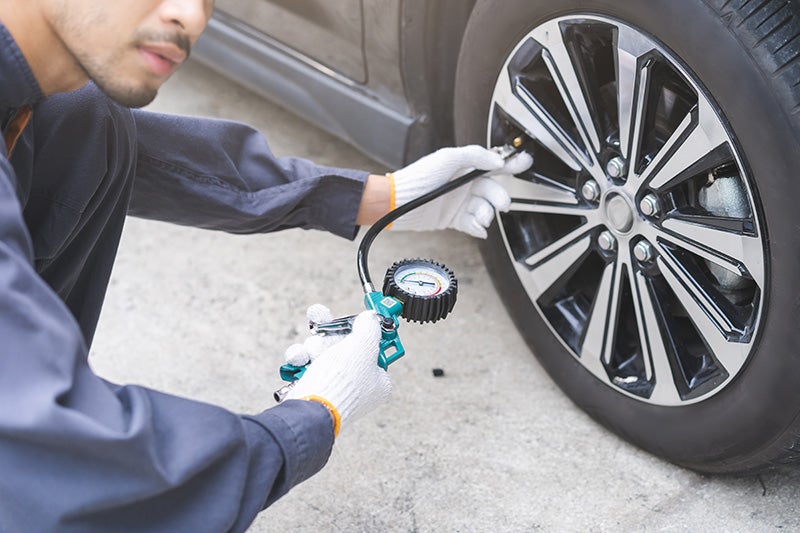
Winter in Rockville, Maryland is no joke, and that cold weather hits fast. With those dropping temperatures something else drops: the tire pressure in your Genesis vehicle. If you’ve ever gotten into your pre-heated Genesis in the morning and seen the TPMS warning on the dashboard, you already know it can be a little nerve-wracking—or you ignore it. Understanding just how cold weather interacts with your tire pressure will let you know if there’s a bigger issue, help you stay safe, and keep your vehicle performing at its best all season long.
Why Cold Weather Drops Your Tire Pressure
Cold weather sensitivity in your tires is rooted in basic physics. As temperatures fall, the air inside your tires contracts, which causes the pressure to drop. For every 10-degree decrease in outside temperature, tire pressure drops between 1 and 2 lbs. per square inch. That might not sound like much, but across all 4 tires, it adds up quickly, especially during a sustained cold snap.
This is completely normal, but it does require your attention. Underinflated tires compromise handling, increase tire wear, and even impact fuel efficiency, so it's worth addressing the moment you notice the change.
Understanding Your Genesis TPMS Light
Your Genesis is equipped with a Tire Pressure Monitoring System, and the Genesis TPMS light is designed to alert you when one or more tires drop below the recommended pressure threshold. You may notice this light appearing in the morning after an overnight cold spell, even if your tires were properly inflated the day before.
If the Genesis TPMS light comes on, don't panic. Your Genesis very well may have a display on the instrument cluster that will show you the PSI of each tire. Otherwise, check the tire pressure on all 4 tires using a reliable gauge and add air as needed to match the recommended PSI listed on the sticker inside your driver's door jamb. Once all tires are properly inflated, the light should turn off on its own after you've driven a short distance.
How to Check and Maintain Proper Tire Pressure in Winter
The best time to check your Genesis tire pressure cold weather conditions demand is in the morning, before you've driven more than a mile. This gives you a true cold-pressure reading, which is what your vehicle's recommended PSI is based on. Checking after driving can give you a falsely elevated reading because driving heats the air inside the tires.
Keep a quality tire pressure gauge in your glove compartment so you can check pressure quickly when needed. Many gas stations have air pumps available, and some Genesis service centers will check your tire pressure for free. It's a good habit to inspect tire pressure at least once a month during winter months and any time the Genesis TPMS light appears.
What to Do If the Light Stays On
If you've added air and the Genesis TPMS light remains on, it could signal a slow leak, a faulty sensor, or a more significant tire issue. In this case, it's a good idea to have your vehicle inspected by a qualified technician. Ignoring a persistent warning could lead to a flat tire or reduced control in wet or icy conditions—neither of which you want to deal with on a cold Rockville, MD morning.
It's also worth noting that if you switch to winter tires seasonally, each wheel and tire combination needs its own properly calibrated TPMS sensor to ensure accurate readings throughout the colder months.
Keep Your Genesis Tires Winter-Ready
Staying on top of Genesis tire pressure cold weather concerns is one of the simplest things you can do to protect your investment and your safety this season. A few minutes spent checking your tires can make a meaningful difference in how your vehicle handles on cold roads. If you have any questions about your tires, sensors, or winter vehicle maintenance, the team at Genesis of Rockville right here in Maryland, is ready to help you keep your Genesis running confidently through every season.